How to Select the Best Paint Booth for Your Unique Application
How to Select Best Size of Paint Booth?
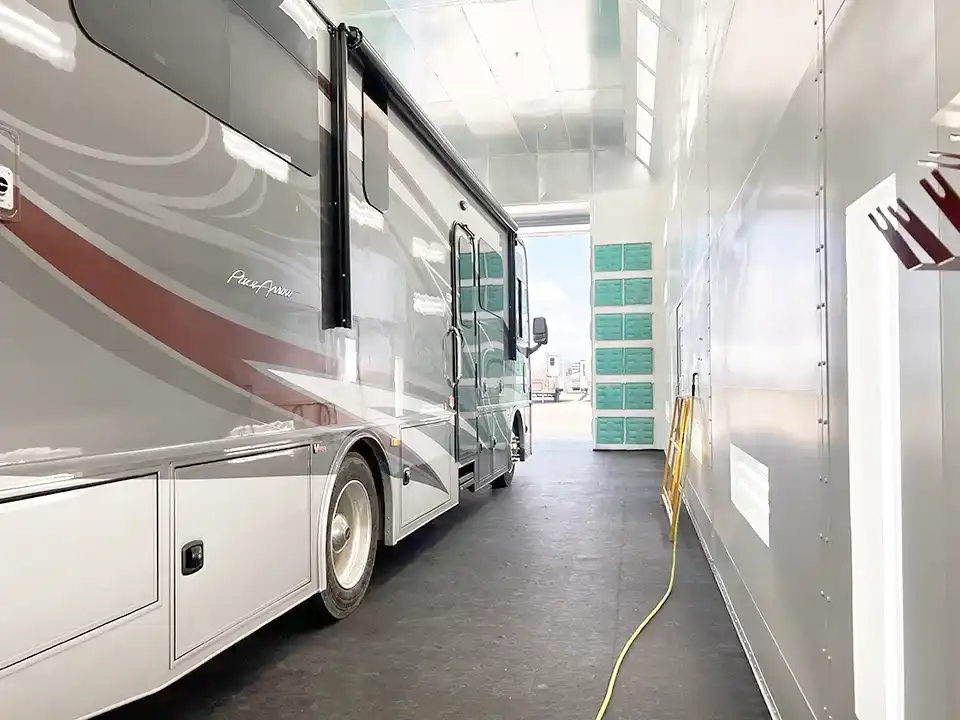
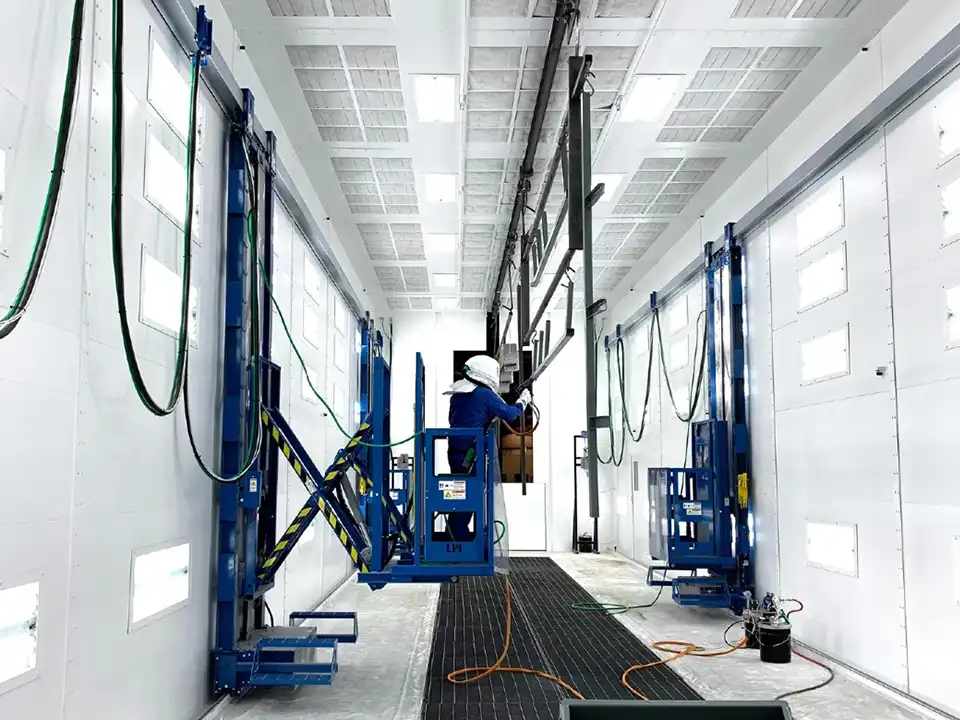
A paint booth should have large enough interior working dimensions to allow for at least 3' clearance around the item you are coating. If you have an item that is 10' wide x 10' tall x 22'
long your booth should have interior working dimensions of 16' wide x 13' tall x 28' long. 16' wide ( 3' on each side of the 10' wide item) x 13' tall (3' above the 10' tall item) x 28' long (3' in front of and 3' behind
22' long item).
Some appications require scaffolding or lifts to reach all areas of the item being painted or it just may feel more comfortable to have more than 3' around the item. The 3' is not
a code requirement.
Keep in mind the cross section of a crossdraft or semi downdraft booth are used to determine the code compliant airflow. A booth that is 16' wide x 13' tall would require 20,800 CFM to provide the code compliant velocity of 100 FPM. 16x13x100 = 20,800 CFM.
Downdraft booths only require 50 FPM but use the width times the length to compute airflow. A booth that is 16' wide x 28' long would require 22,400 CFM . 16x28x50 = 22,400.
What is the Best Airflow for a Paint Booth?
The best airflow for your unique application depends on what you are coating. If your part is a large rectangular cube piece, like a shipping container, and being coated with one color a pressurized crossdraft may be best for you.
If you are doing multiple colors a downdraft booth may help with overspray getting on already coated parts of the piece. If your booth is extra wide, say over 20', a semidowndraft or downdraft may provide more even airflow.
There is no definitive answer because each application is different. It is best to find a supplier with many years of experience with unique applications to help you select the best booth airflow for your application.
Look for a supplier that has worked through many projects and has learned from their experiences.
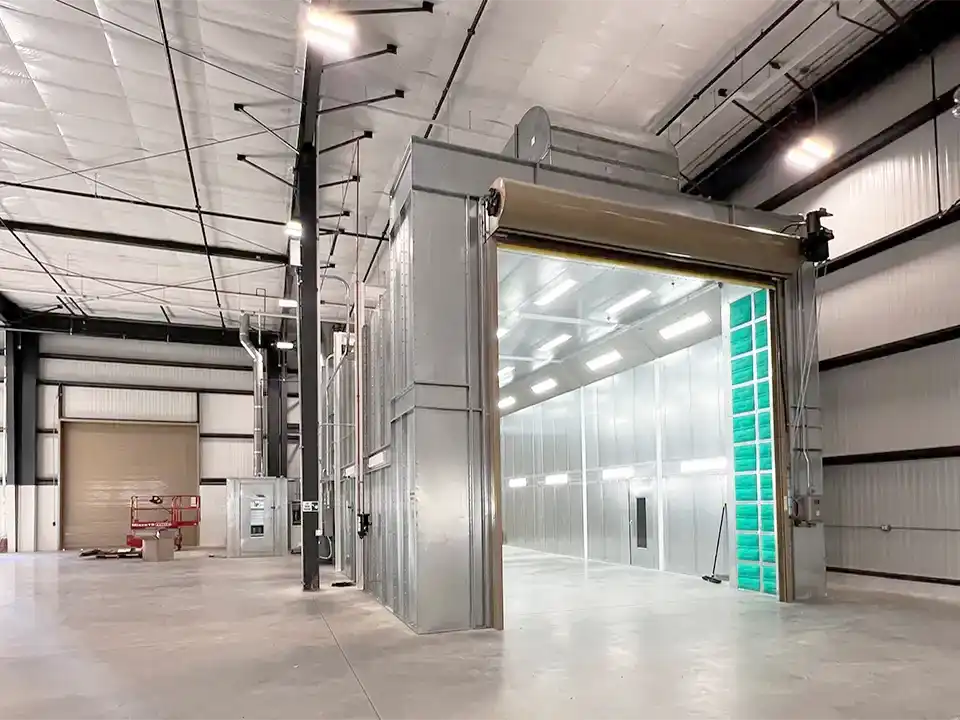
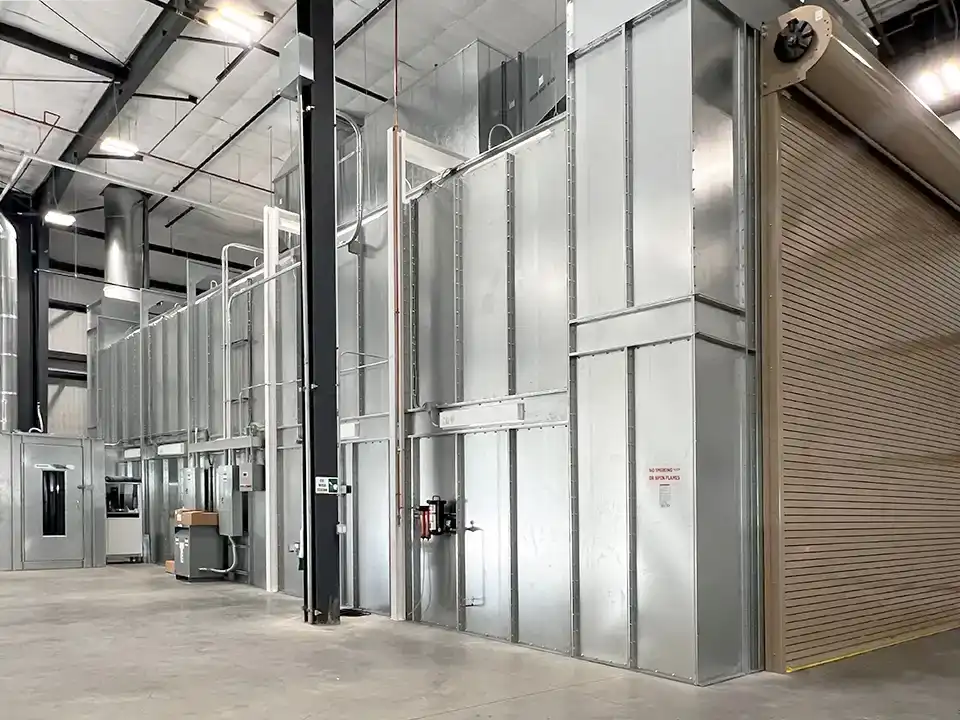
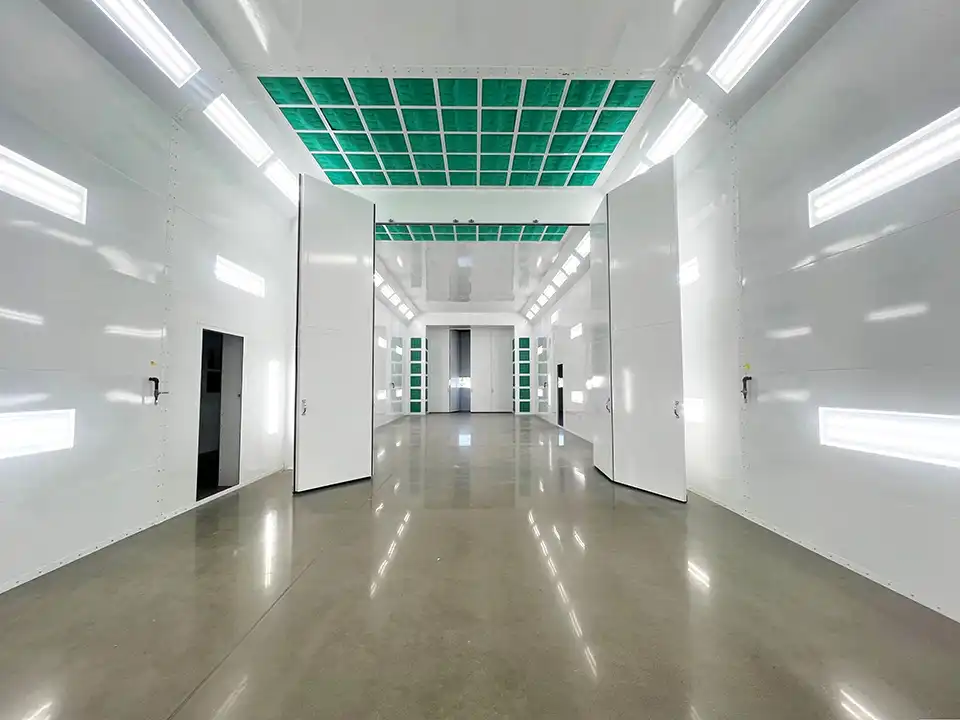
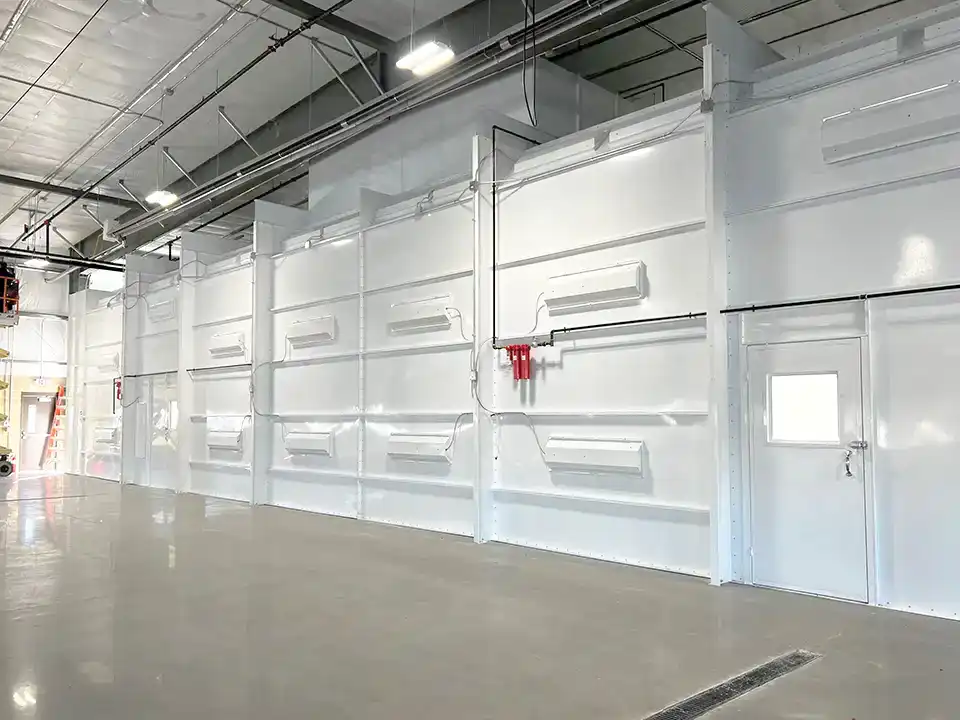
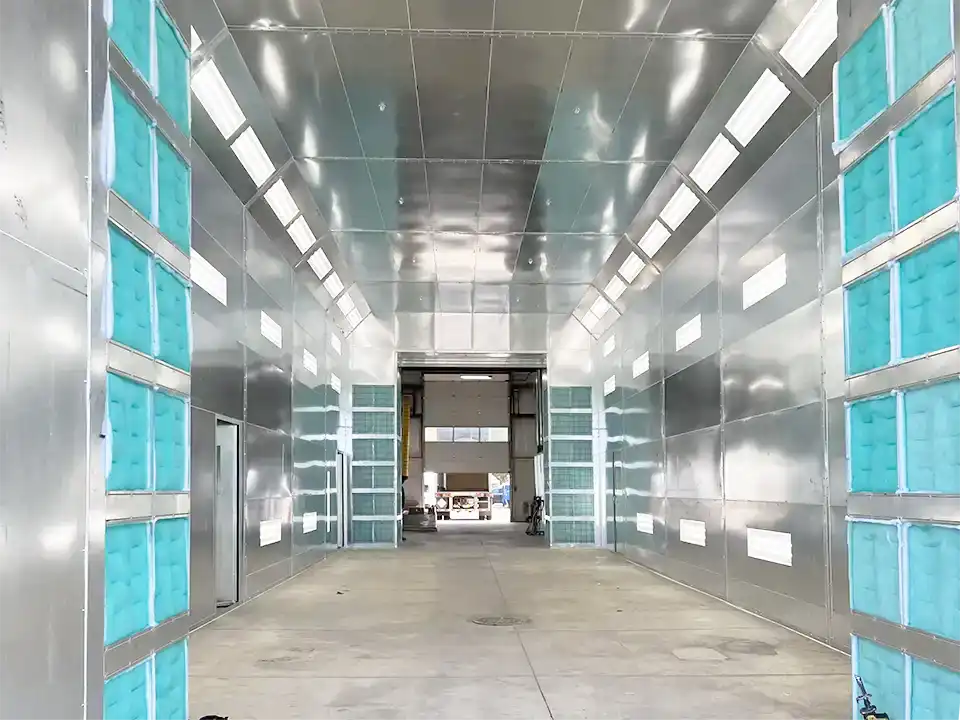
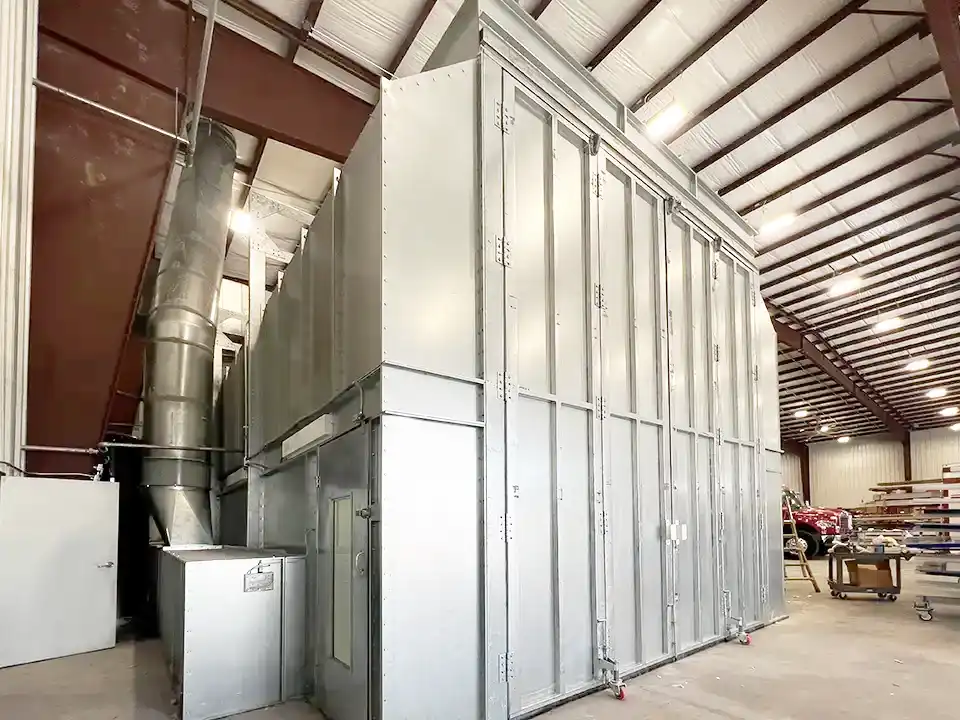
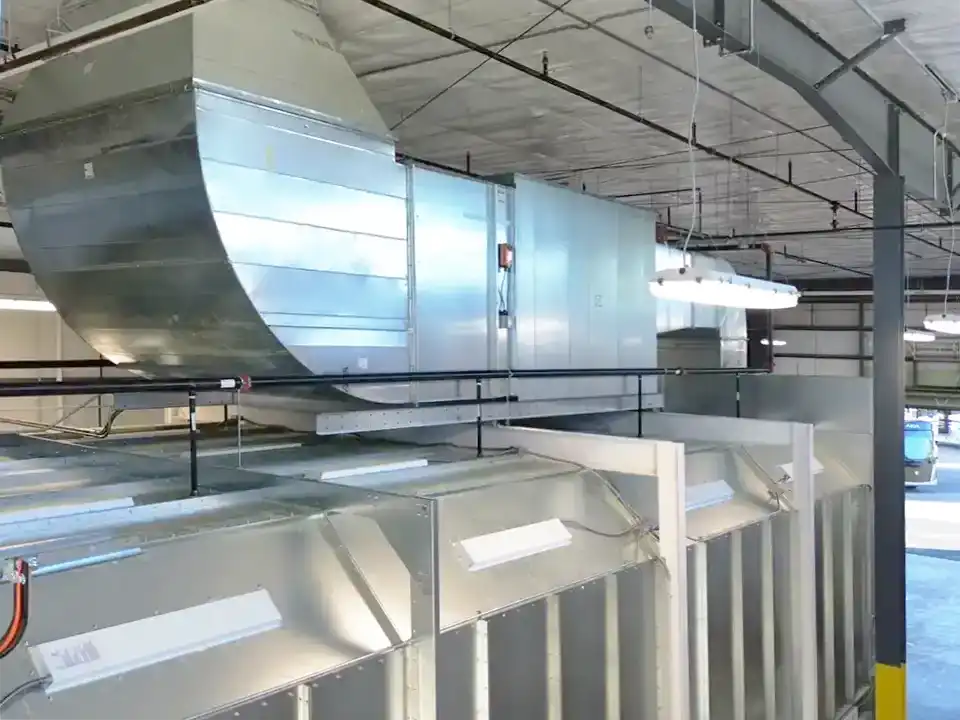
Crossdraft Airflow: Air enters the booth through the filtered front doors or filtered intake columns inside of the booth for a pressurized booth. The clean filtered air flows through the work area and is pulled through the filtered exhaust chamber or exhaust columns at the rear of the booth by an exhaust fan.
Semi Downdraft Airflow: The air makeup unit pushes air into the booth through the filtered intake plenum on top of the booth above the front doors. The clean filtered air flows through the work area and is pulled through the filtered exhaust chamber at the rear of the booth by an exhaust fan.
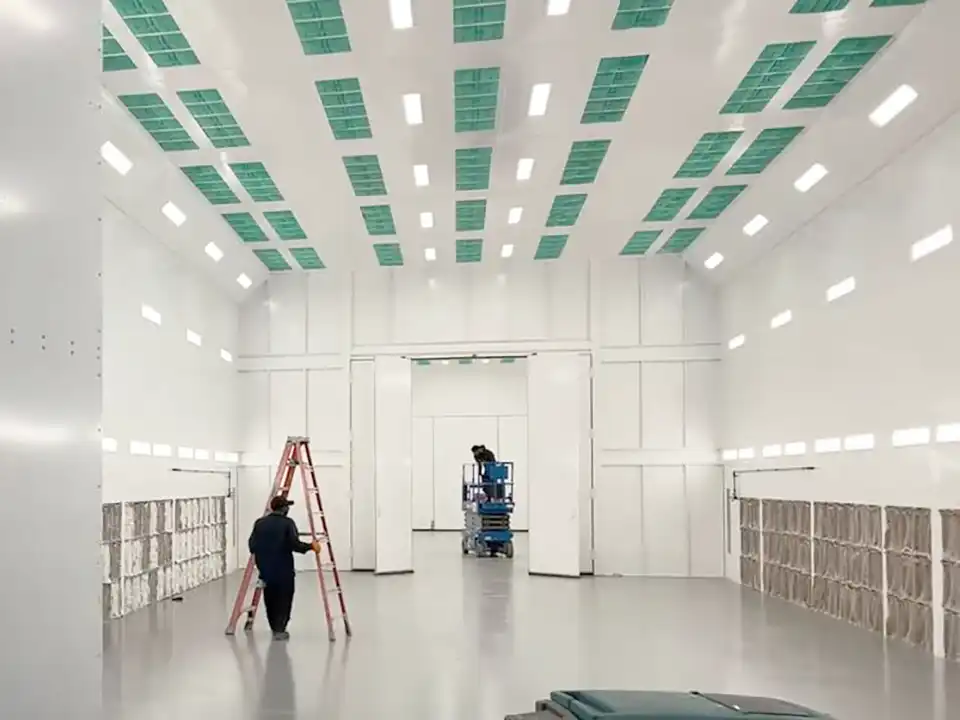
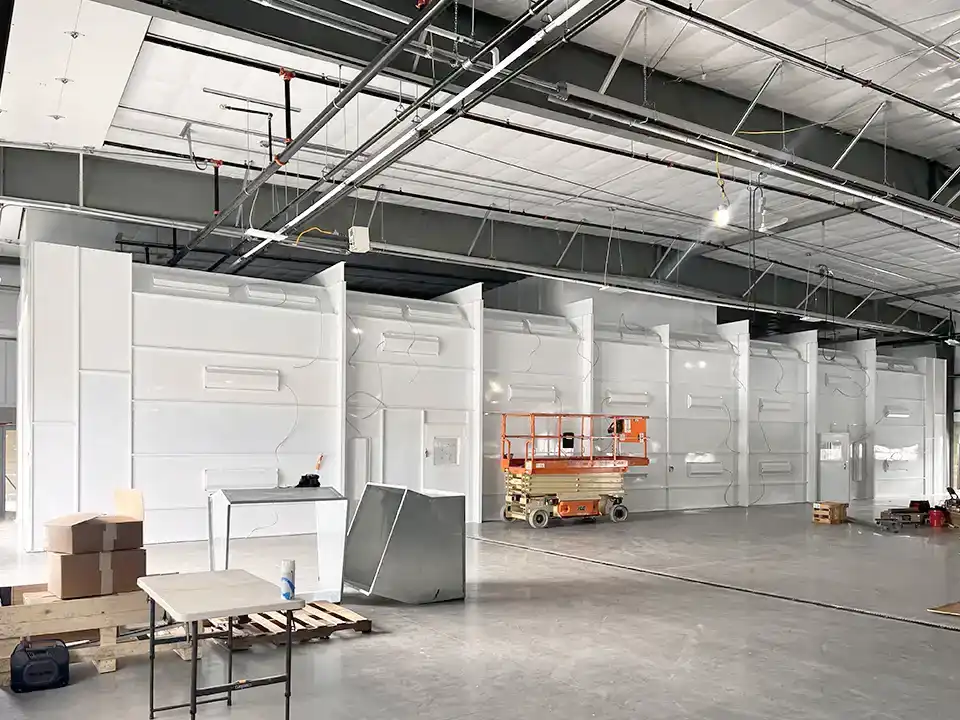
Downdraft Airflow: The air makeup unit pushes air into the booth through the full length filtered intake plenum on top of the booth. The clean filtered air flows through the work area and is pulled through the filtered exhaust chambers at floor level in the side walls of the booth or by a filtered grated pit in the floor of the booth by an exhaust fans.
What Codes Does a Paint Booth Need to Meet?
Your paint booth will need to comply with O.S.H.A., N.E.C., and N.F.P.A., and any Local Codes Unique to Your Location
O.S.H.A. Your booth and painting procedures will need to comply with the recommendations of the Occupational Safety and Health Organization. This covers worker safety and the safety of all people in the building.
N.E.C. Your booth and painting procedures will need to comply with the recommendations of the National Electric Code. This covers all wiring of your paint booth, where electrical fixtures are allowed with regard to a paint booth, and the codes for what electrical compnents are allowed.
N.F.P.A. Your booth and painting procedures will need to comply with the recommendations of the National Fire Protection Association. These are guidelines used by a local fire marshal to make certain your booth complies with all local fire codes. The local fire codes vary according to where you are located. The local fire marshal has final say on whether your booth setup is compliant or not.
What is the Required Clearance Around a Paint Booth?
A paint booth usually requires 3' of clearance on all sides. If the booth is near an outside wall sometimes the local fire marshall will allow you to move the booth closer to that outside wall.
The reasoning behind this is that if the booth is too close to a common wall with people on the other side of the wall it could create a fire hazard. This is soley up to the local authority having jurisdiction over the requirements that must be met by a paint booth.
How Do You Properly Exhaust/Vent a Paint Booth?
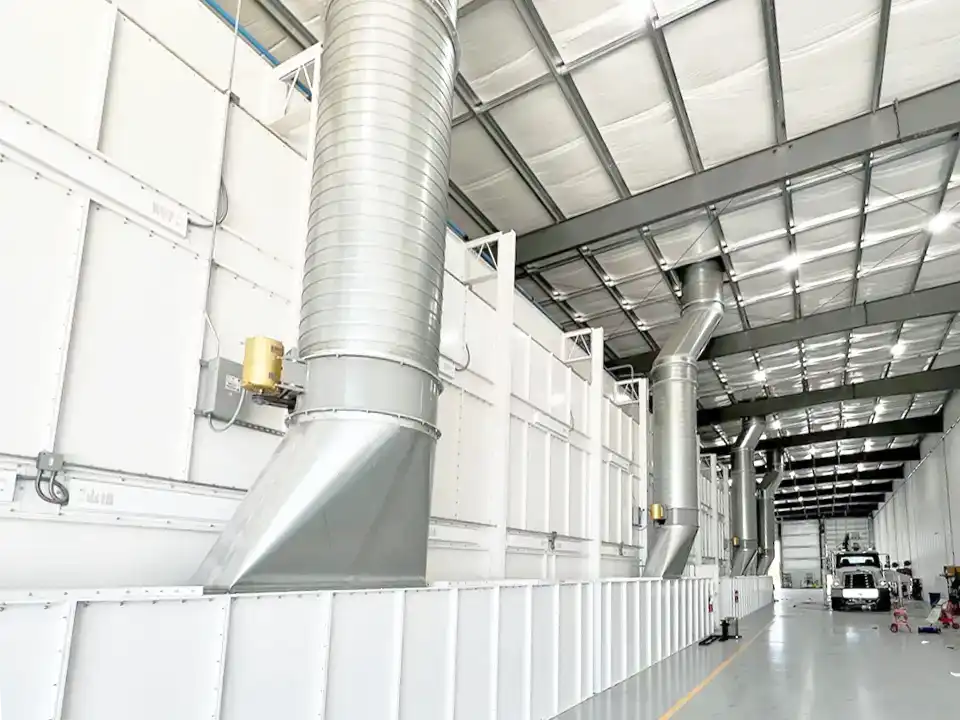
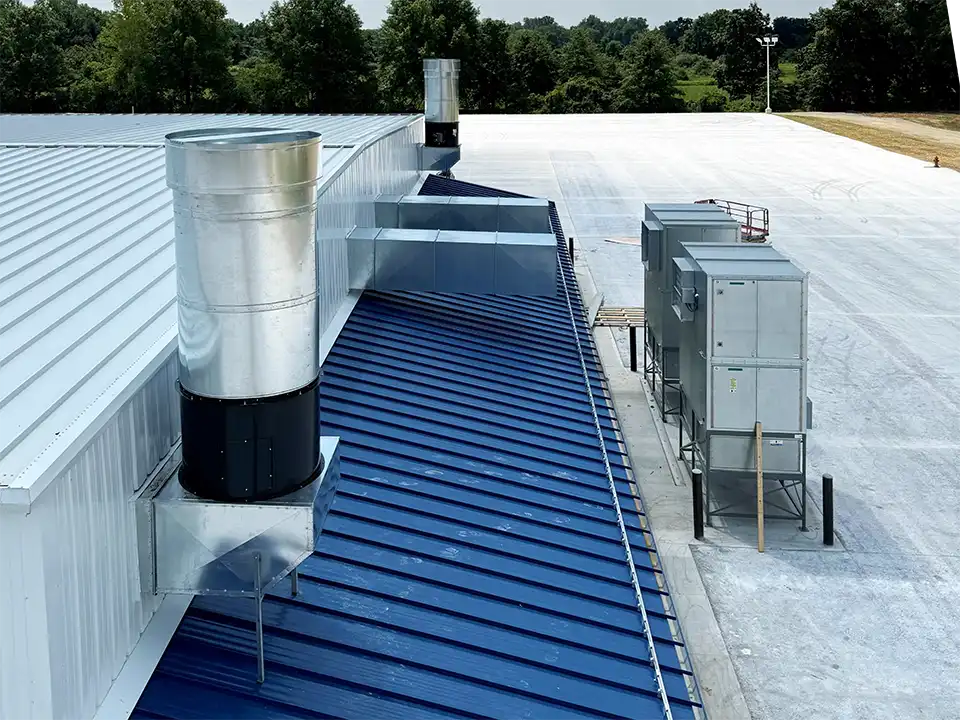
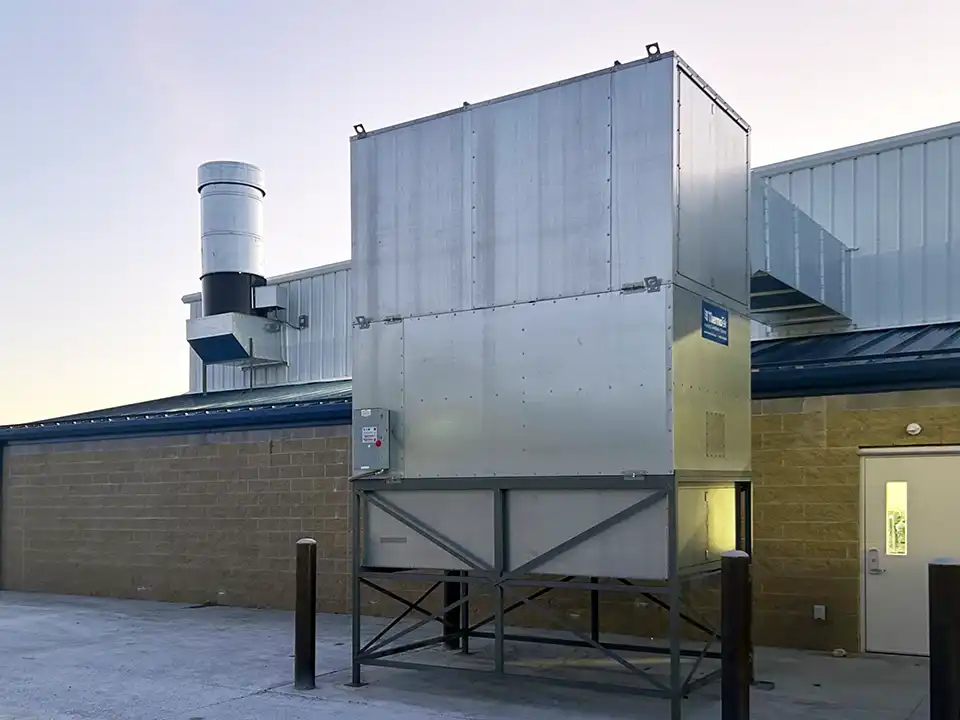
The exhaust from a paint booth must vent to the outside of the building. The exhaust ducting must terminate no less than 6' above the highest part of the roof.
If the exhaust stack is very close to another building it must terminate 6' above the roof of that building. This requirement is different from state to state. Some states require the exhaust duct termination height to be greater the 6'. Always check with the local permitting officials in your area to get the local requirements.
What Kind of Lighting Do You Need in a Paint Booth?
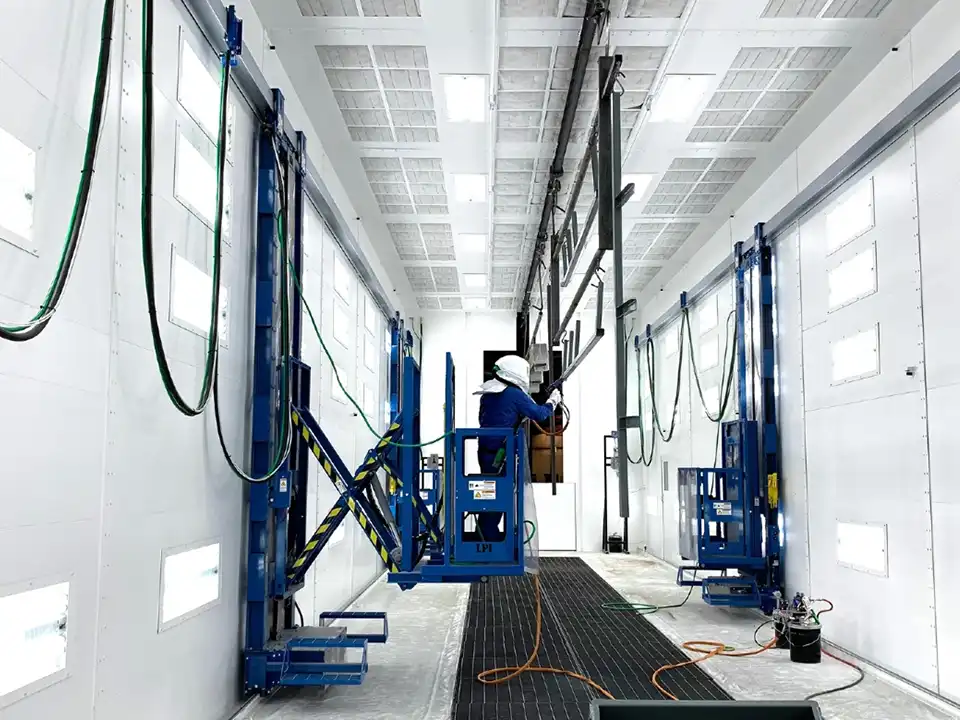
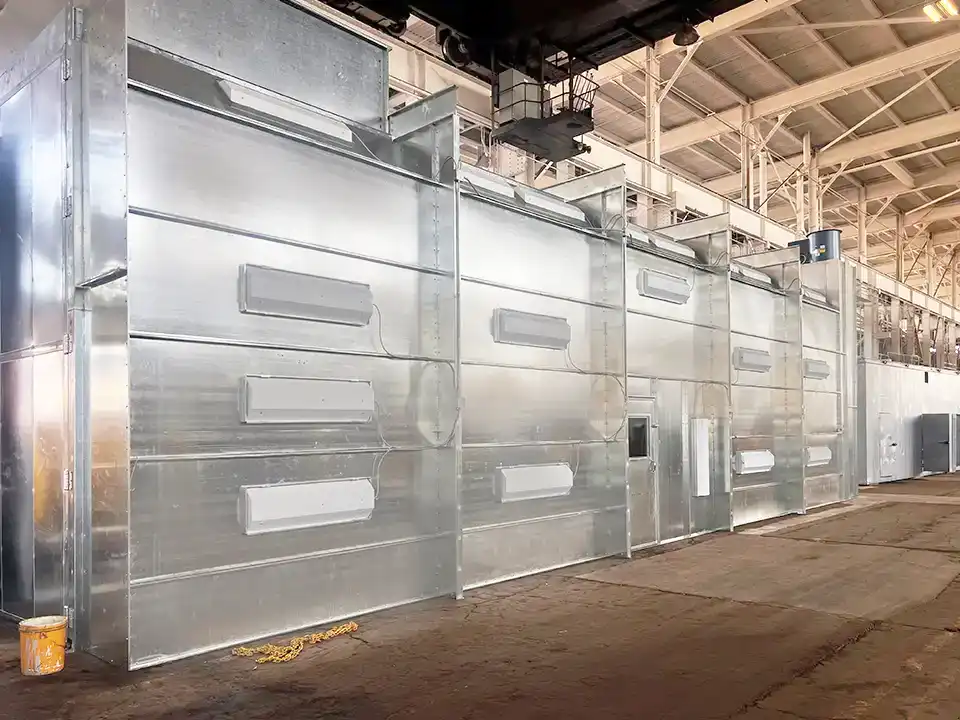
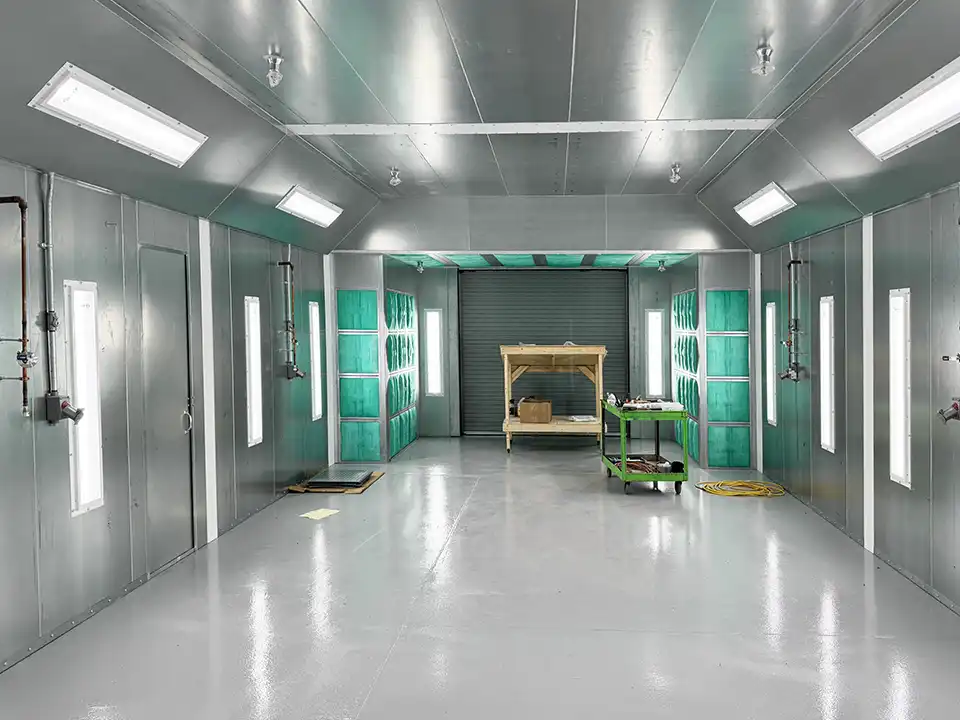
The inside of a paint booth is considered an explosive environment. The electrical connections for the lighting must be outside of the booth to avoid having to use explosion proof lighting. Lighting must be vapor tight
to prevent fumes getting to the electronics of the light fixture. All light fixtures within 3' of an opening in the booth must be rated Class 1 Division 2. This includes light fixtures within 3' of all doors or crane slots in the booth.
When Do You Need an Air Makeup Unit for a Paint Booth?
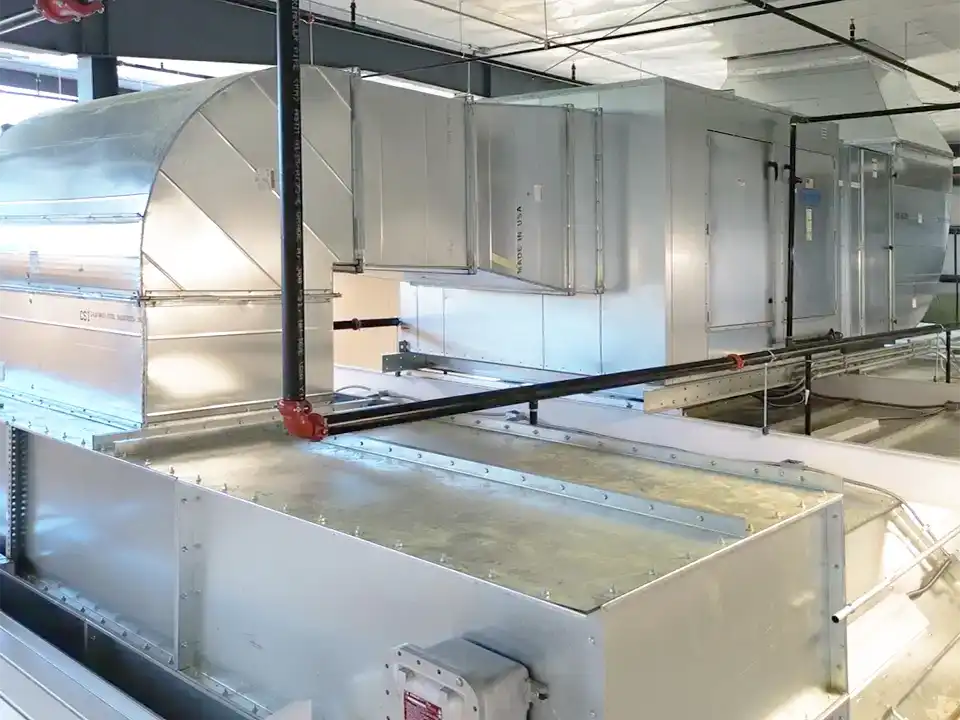
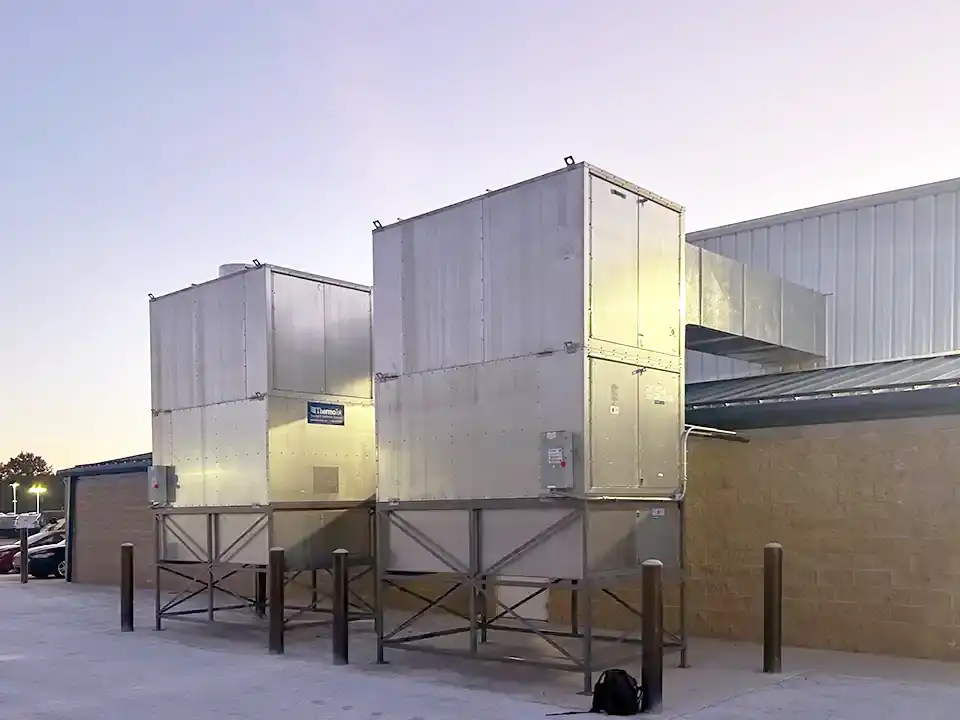
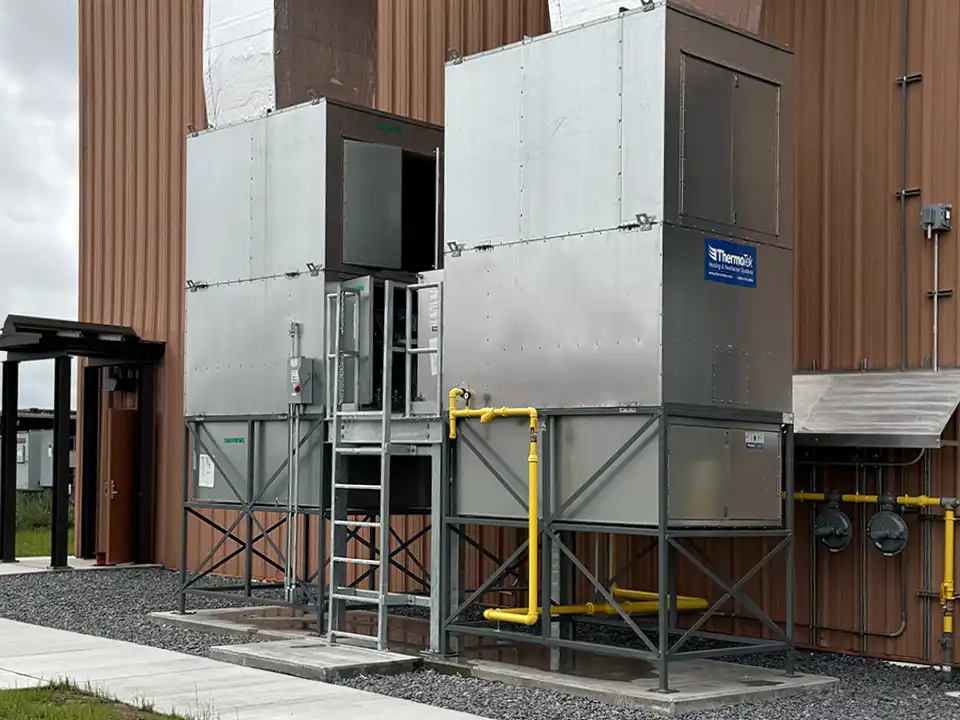
A paint booth exhausts it's air to atmosphere, outside of the building. If the booth is drawing air through filters in the booth doors or through a filtered intake plenum on top of the booth
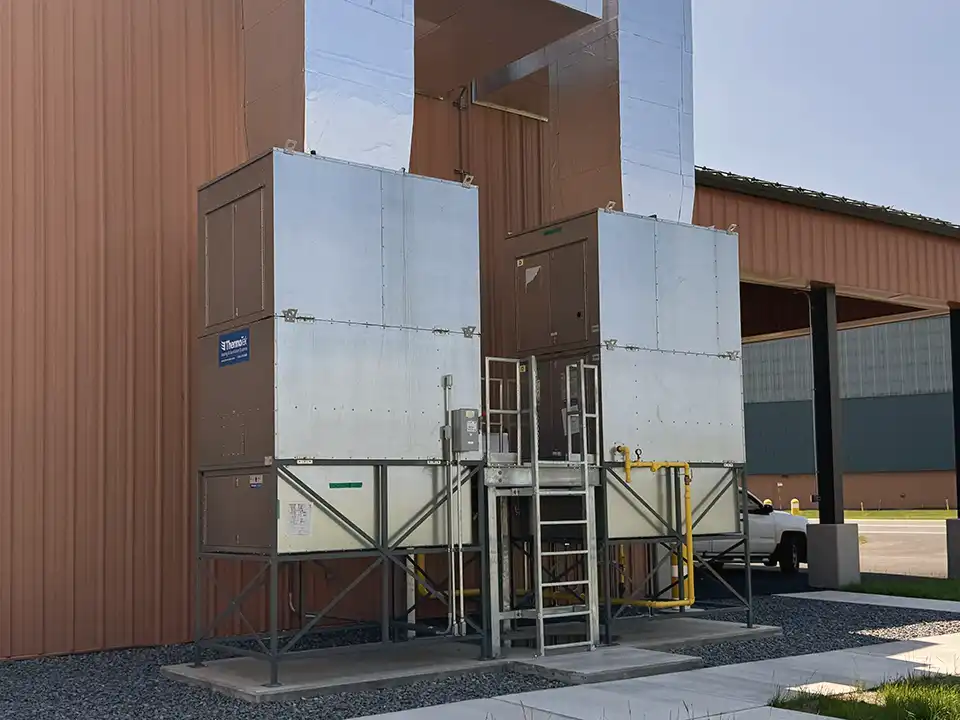
it is drawing air from inside of the building. This can create a negative pressure in the building. You need to either provide replacement air for the building or connect an air makeup unit directly to the booth through an intake plenum. Doing this will avoid creating a negative air pressure in the building.
If you desire a cure or bake cycle with your booth you will need to connect the air makeup unit directly to the booth to create a closed loop system.
How Do You Provide Humidity Control in a Paint Booth?
Some products or coatings require humidity controlled environments for applying the coating. Humidity control is accomplished by using an air makeup unit with an air conditioning system to
bring the incoming air below the local dew point to condence the moisture out of the incoming air. These systems can use chilled water or DX cooling to bring the incoming air down to below the local dew point. These humidity control systems often take advantage of a booth recirculating
system to reduce the amount of air being treated. 80-20 systems that recirculate 80% of the booth air and combine that with 20% of treated air help reduce the cost of air conditioning the air down to below dew point temperature.
These systems require constant monitoring of the recirculated air with gas sensors to assure that the air inside of the booth is less than 25% the LFL (Lower Flammable Limit) or LEL (Lower Explosive Limit) of the coatinging being used.
Always work with a supplier that has experience with these systems as they are costly and work at the edges of the requirements for the air inside of a booth.
Some of Our Completed Projects
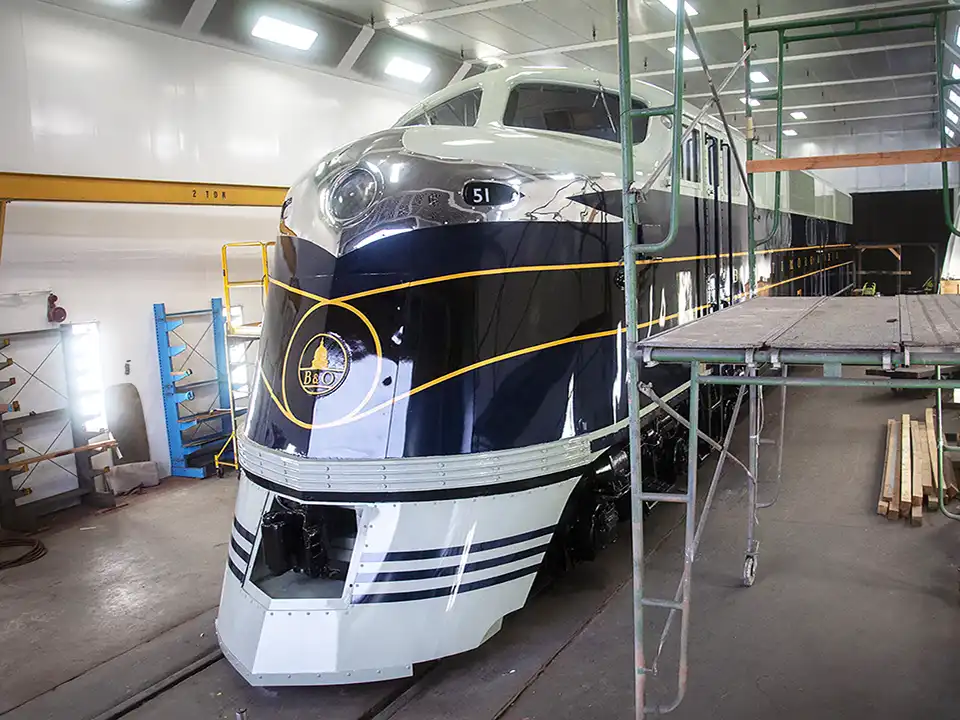
- B&O Railroad Museum -Locomotives
- Exterran - Industrial Lift Equipment
- Kalmar RT - Large All Terrain Loaders
- Haulmark Trailers - Shipping Trailers
- Industrial Rail Services - Rail Cars
- Mayekawa - Cranes and Mobile Cranes
- Manitowoc Cranes - Mobile Cranes
- Waste Management - Waste Vehicles
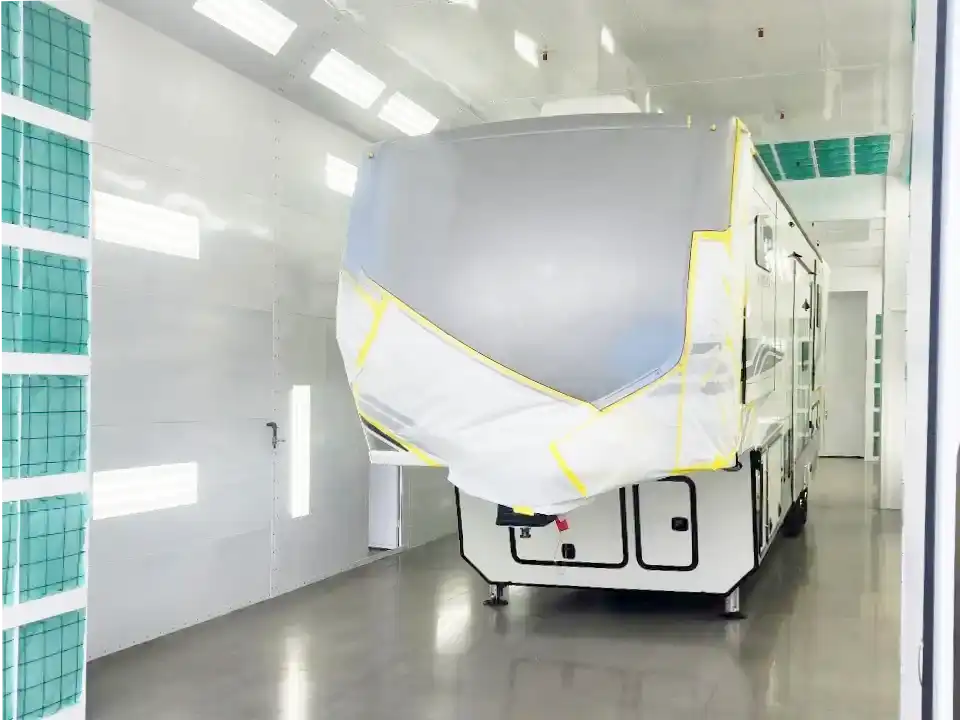
- RCD RV Center- Large RV's
- Ram Fab - Pipes and Pressure Vessels
- Lectrus - Railcar Mounted Generators
- Altec - Cranes and Service Vehicles
- U.S. Fire Pump - Fire Pump Trucks
- General RV Centers - Large RV's
- General Tool - Custom Systems
- Haverfield Aviation - Helicopters
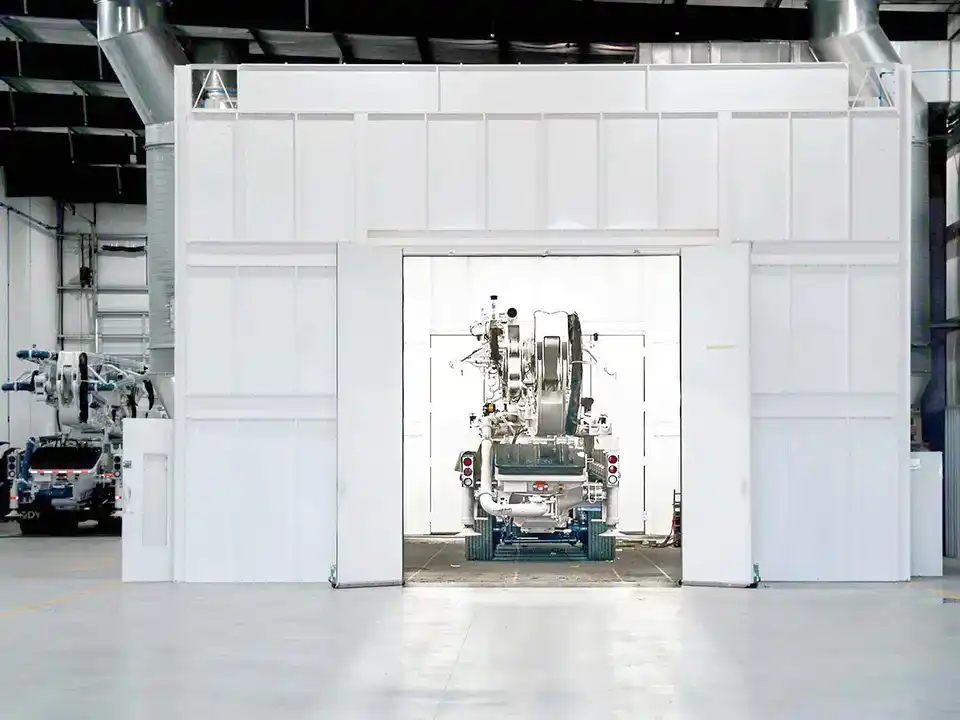
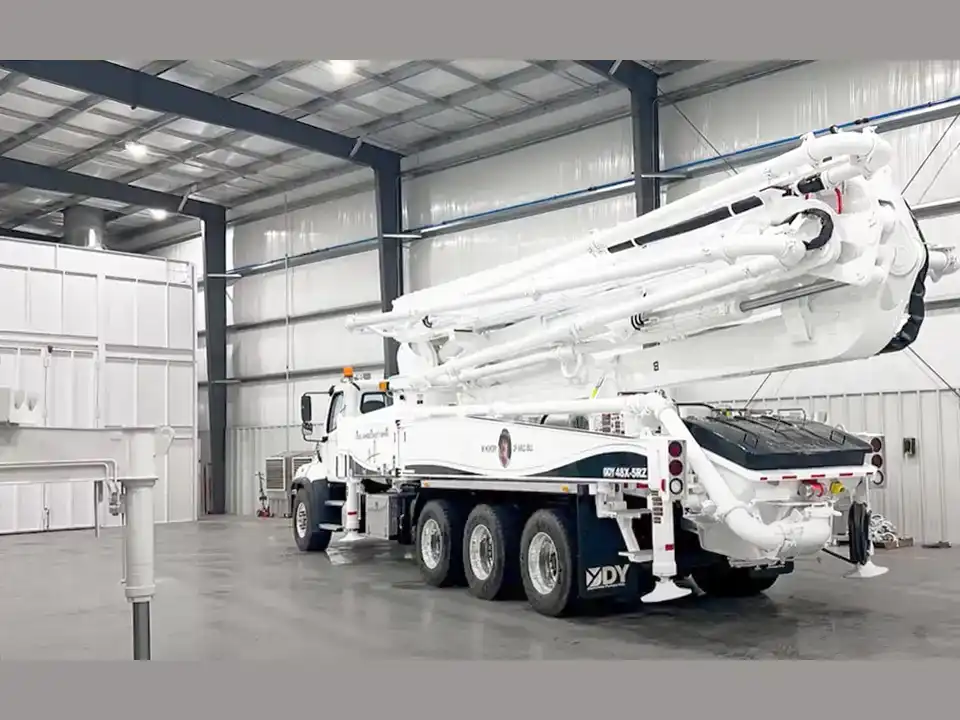
- DY Concrete Pumps - Pump Trucks
- Fort Drum - Helicopter Maintenance
- Technibus - Electrical
Bus Enclosures
- Stevens Aviation - Aircraft
-
Sabreliner Aircraft - Aircraft
- A B Pipe Liners - Oilfield Equipment
- Magnaloy - Hydraulic Equipment
- Baldor - Electric Motors